Abstract
Severe acute respiratory syndrome coronavirus 2 (SARS-CoV-2) appeared in Wuhan, China, in late December 2019 and has rapidly spread around the world. By June 11, 2020, over 7.1 million individuals were infected, and more than 408 000 fatalities had been reported. Currently, there is no specific antiviral drug for this epidemic. It is worth noting that recently, an experimental drug, Remdesivir, has been recognized as a promising anti-SARS-CoV-2 drug. However, the high experimental value of IC50 (11.41 μM) indicates that it must be used in a large dose in treating COVID-19, which is subject to side effects. Considering the severity of this widespread dissemination and health threats, panicked patients misled by media flocked to pharmacies for Chinese medicine herbs, which were reported to “inhibit” SARS-CoV-2, despite no clinical evidence supporting the claim. Although there is also no evidence for Chloroquine’s claimed curing effect, some desperate people take it as “prophylactic” for COVID-19. Many researchers are engaged in developing anti-SARS-CoV-2 drugs. However, new drug discovery is a long, costly, and rigorous scientific process. A more effective approach is to search for anti-SARS-CoV-2 therapies from existing drug databases. Drug repositioning (also known as drug repurposing), which concerns the investigation of existing drugs for new therapeutic target indications, has emerged as a successful strategy for drug discovery because of the reduced costs and expedited approval procedures.
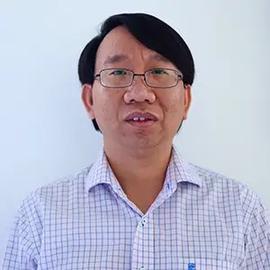
Duc Nguyen
Associate Professor of Mathematics
Duc Nguyen develops mathematical and AI frameworks for molecular bioscience, drug discovery, and scientific computing. His group blends differential geometry, graph theory, and machine learning to build high-fidelity models for biomolecular systems, with notable wins in the D3R Grand Challenges and collaborations with Pfizer and Bristol Myers Squibb. Supported by multiple NSF awards, he has advised students and postdocs across theory and applications of AI-driven drug design.