Abstract
In structure-based drug design, accurately estimating the binding affinity between a candidate ligand and its protein receptor is a central challenge. Recent advances in artificial intelligence, particularly deep learning, have demonstrated superior performance over traditional empirical and physics-based methods for this task, enabled by the growing availability of structural and experimental affinity data. In this work, we introduce DeepGGL, a deep convolutional neural network that integrates residual connections and an attention mechanism within a geometric graph learning framework. By leveraging multiscale weighted colored bipartite subgraphs, DeepGGL effectively captures fine-grained atom-level interactions in protein-ligand complexes across multiple scales. We benchmarked DeepGGL against established models on CASF-2013 and CASF-2016, where it achieved state-of-the-art performance with significant improvements across diverse evaluation metrics. To further assess robustness and generalization, we tested the model on the CSAR-NRC-HiQ dataset and the PDBbind v2019 holdout set. DeepGGL consistently maintained high predictive accuracy, highlighting its adaptability and reliability for binding affinity prediction in structure-based drug discovery.
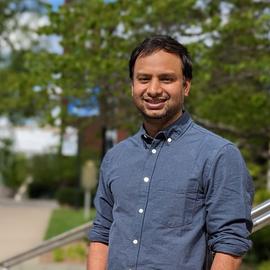
Masud Rana
Assistant Professor of Mathematics, Kennesaw State University (former Nguyen Lab postdoc)
Masud Rana is an assistant professor of mathematics at Kennesaw State University and a former postdoctoral scholar in the Nguyen Lab. He works on graph-theoretic and geometric methods for AI-driven drug discovery.
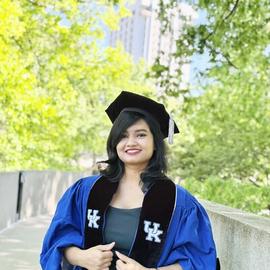
Farjana Mukta
Lecturer of Mathematics, Kennesaw State University (Former Nguyen Lab PhD Student)
Farjana Tasnim Mukta is a Lecturer of Mathematics at Kennesaw State University. She received her PhD in Mathematics from the University of Kentucky in 2024, advised by Dr. Duc Nguyen. Her research focuses on advanced mathematical graph-based machine learning and deep learning models for drug design.

Duc Nguyen
Associate Professor of Mathematics
Duc Nguyen develops mathematical and AI frameworks for molecular bioscience, drug discovery, and scientific computing. His group blends differential geometry, graph theory, and machine learning to build high-fidelity models for biomolecular systems, with notable wins in the D3R Grand Challenges and collaborations with Pfizer and Bristol Myers Squibb. Supported by multiple NSF awards, he has advised students and postdocs across theory and applications of AI-driven drug design.