Element Interaction Manifolds for Systematic Analysis of Geometric Representations in Protein–Ligand Recognition
Abstract
Accurate modeling of protein–ligand interactions requires representations that capture both molecular geometry and chemically specific interactions. This work presents a unified geometric study centered on the Element Interaction Manifold (EIM) framework, integrating element-interactive curvature, surface-area, and volume descriptors and comparing them against global 3D Zernike descriptors and a chemically partitioned extension (EP-3DZD). Across PDBbind/CASF-2016 affinity prediction and unsupervised ligand-identity recognition tasks, chemically resolved local differential geometry provides the strongest predictive performance and the best accuracy–complexity trade-off, while combinations with spherical harmonic descriptors provide only marginal gains.
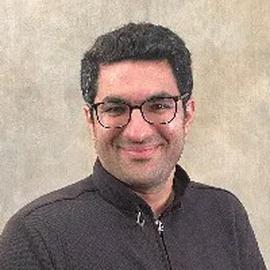
Alireza Shahi
PhD Student
Placeholder bio — replace with the student’s short biography from https://math.utk.edu/people/alireza-shahi/
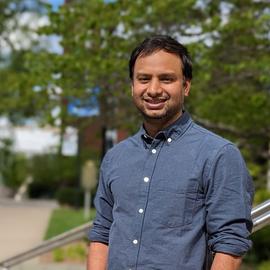
Masud Rana
Assistant Professor of Mathematics, Kennesaw State University (former Nguyen Lab postdoc)
Masud Rana is an assistant professor of mathematics at Kennesaw State University and a former postdoctoral scholar in the Nguyen Lab. He works on graph-theoretic and geometric methods for AI-driven drug discovery.

Duc Nguyen
Associate Professor of Mathematics
Duc Nguyen develops mathematical and AI frameworks for molecular bioscience, drug discovery, and scientific computing. His group blends differential geometry, graph theory, and machine learning to build high-fidelity models for biomolecular systems, with notable wins in the D3R Grand Challenges and collaborations with Pfizer and Bristol Myers Squibb. Supported by multiple NSF awards, he has advised students and postdocs across theory and applications of AI-driven drug design.